The instruments hold your attention. The rest is yours.
Healing names an outcome
Nobody in the room can promise one.
Sound meditation is honest
So is sound journey. Both say what happens.
Skill is heard, not seen
You do this with your eyes closed.
THE SHORT VERSION
Five things worth noticing
None of these proves anything by itself. Each one is a reason to ask another question.
The five
They call it sound healing
The training calls itself sound healing
Crystal bowls taught as the chakras in C major
A loop pedal under the session
The outfit and the photogenic collection
RED FLAG ONE
They call it sound healing
Healing names an outcome. Put it in front of sound and you have claimed that the sound heals you, or that the person holding the mallet does.
People get there three ways. They never questioned the word. They questioned it and kept it, because the search traffic is there. Or they believe it, and that is the one to walk away from.
A healer needs somebody to be healed. Set that up and the person lying down is a passive recipient. Alexandre Tannous makes the same case in his own piece on the term.
RED FLAG TWO
The training calls itself sound healing
One practitioner using the word is one decision. A training using it hands that decision to everybody who pays.
Yoga Alliance will not take it either. Submit an outline carrying therapy or healing and the system rejects it. I have tried. So a sound healing training claiming Yoga Alliance approval is claiming something that cannot be true.
Teach the word, by all means. Students meet it the day they leave. Ten minutes of a course. That it is missing from most of them is the flag.
RED FLAG THREE
Crystal bowls as the chakras in C major
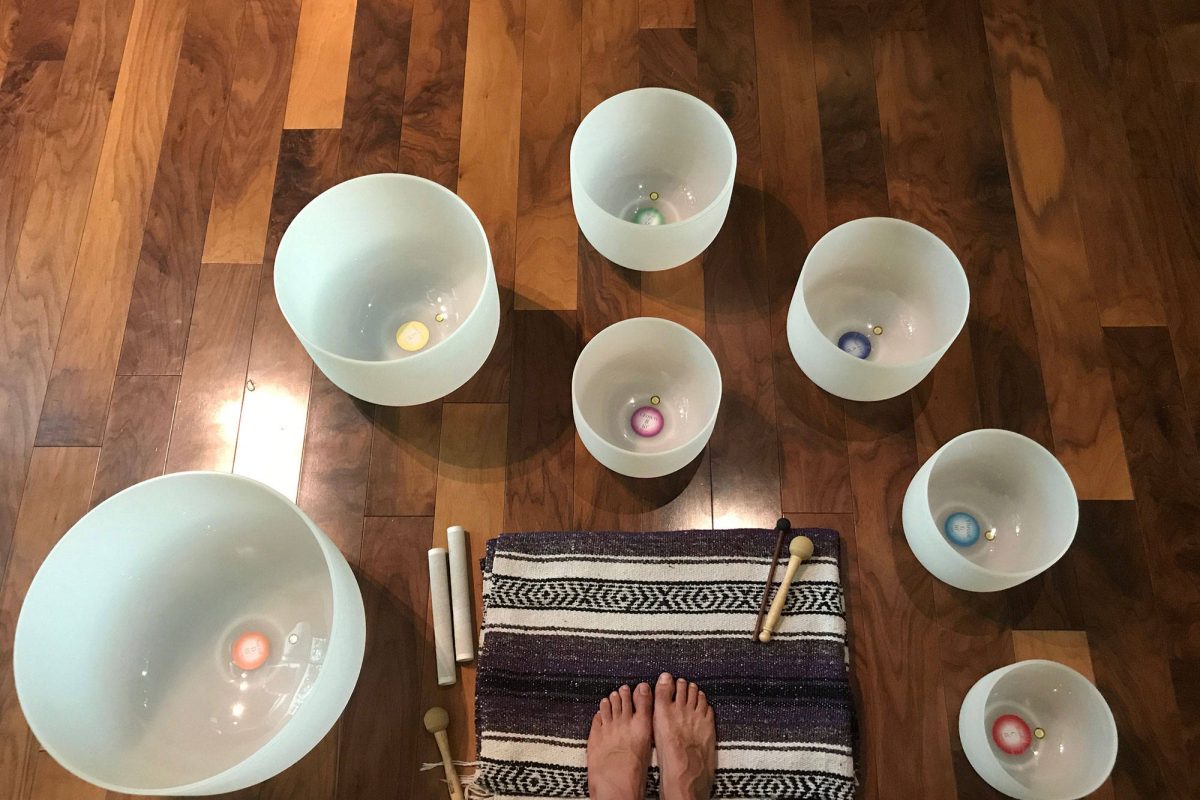
Seven bowls, C at the root and up the scale to B at the crown. It is on every chart and every label.
The chakra traditions are old. Equal temperament is about a hundred years into general use. The pairing was made in living memory, by people selling sets of seven.
Teaching the arrangement is fine, because students meet it everywhere. Teaching it as something somebody discovered is the flag.
There is a great deal more to where these bowls come from and how a set of seven gets assembled. Read what a crystal bowl is
RED FLAG FOUR
A loop pedal under the session
A loop pedal records a phrase and repeats it on a fixed cycle. It fills a room inside thirty seconds.
A repeating cycle gives the mind something to predict. The deep states arrive when there is nothing left to predict, so people stay near the surface. They often enjoy it, which is why the pedal keeps selling.
There is presumably a way to use one well. I have not heard it.
RED FLAG FIVE
The outfit and the photogenic collection
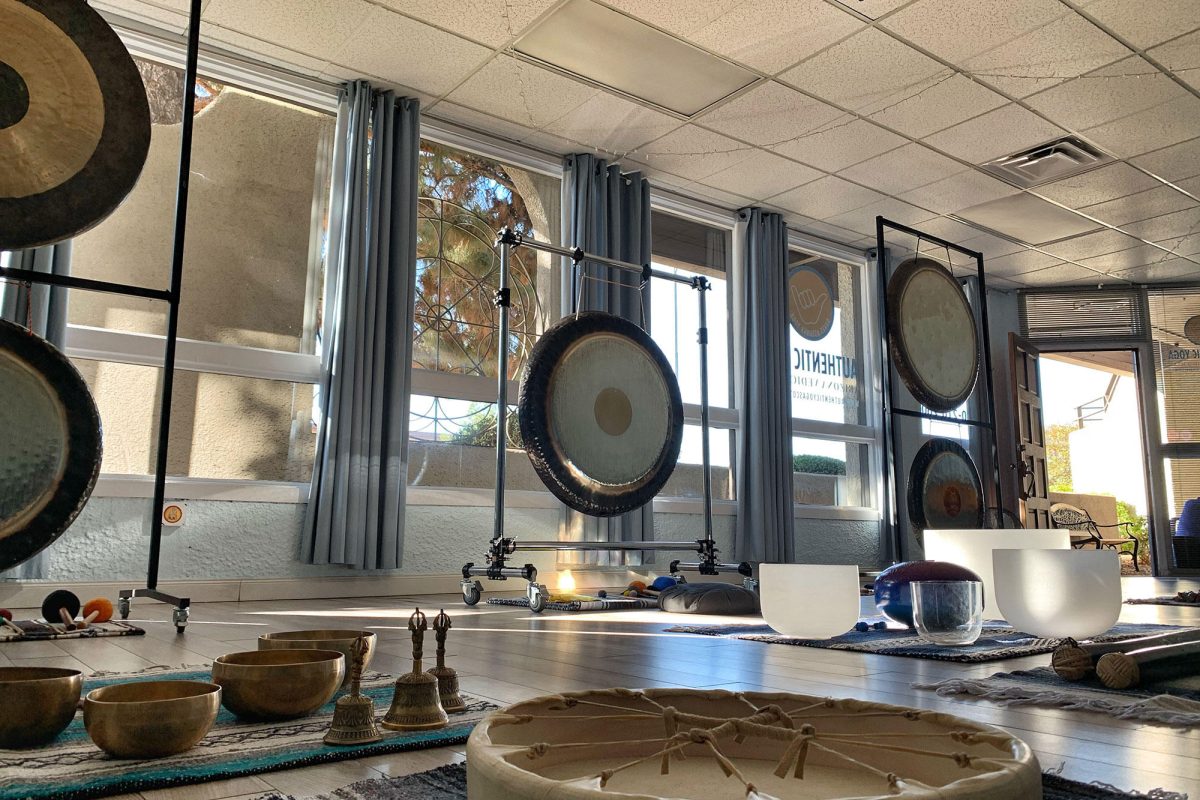
Sound is taken in with the eyes closed. Everything arranged for you to look at stops working the moment the session starts.
When the robes and the styling are carrying the presentation, ask what is carrying the session.
An instrument earns its place by what it does to the air. Buy fewer and better. Two you know completely will hold a room that eight will not.
WHAT IT LOOKS LIKE
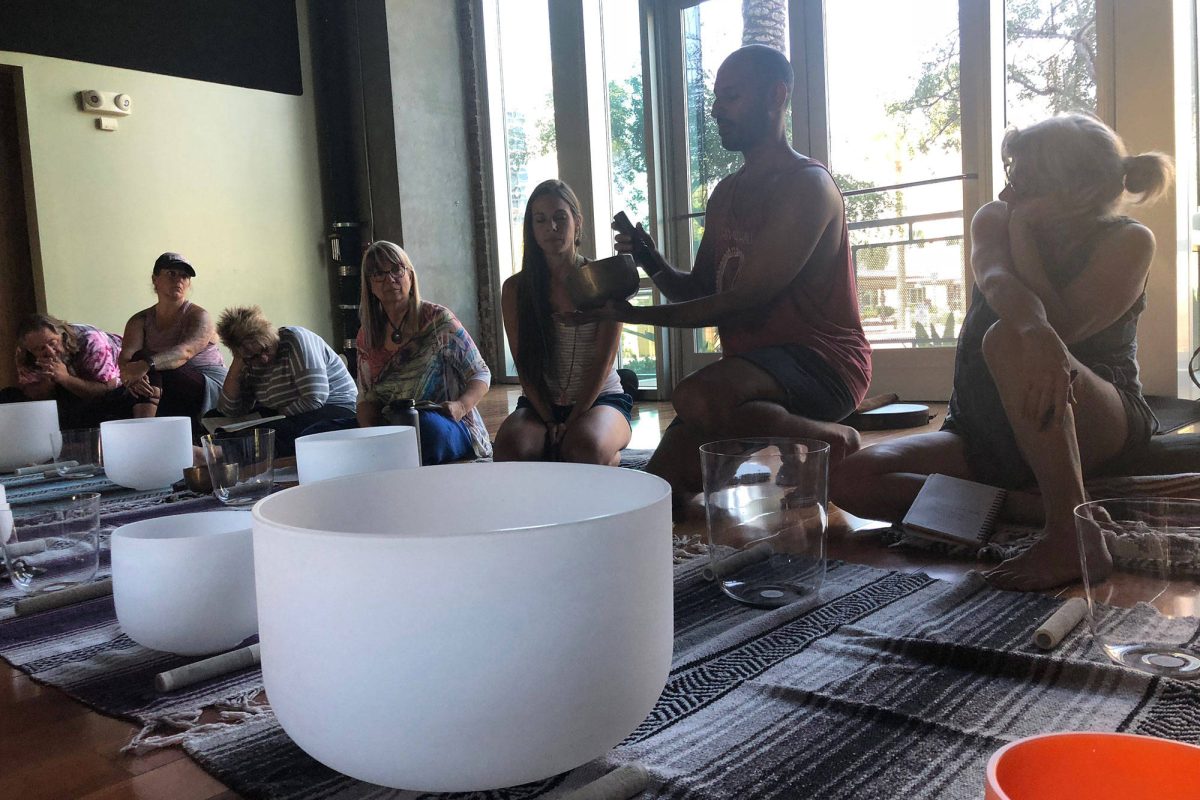
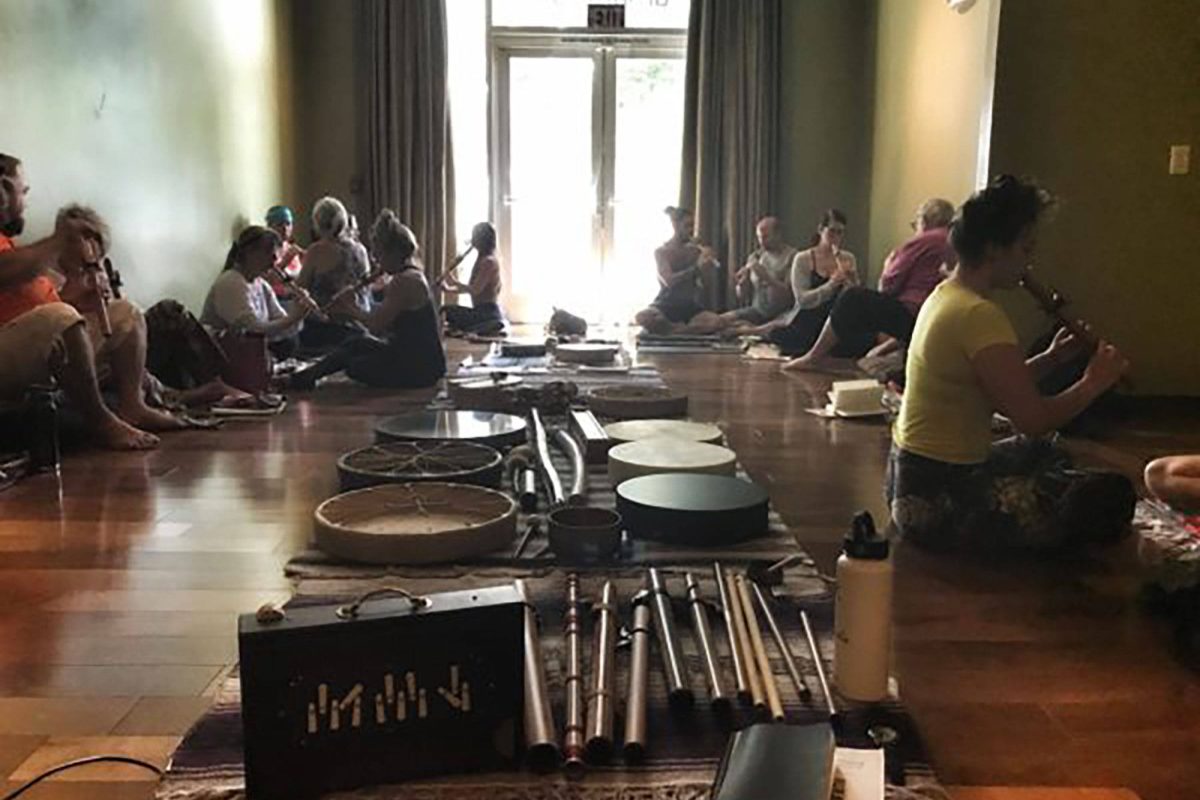
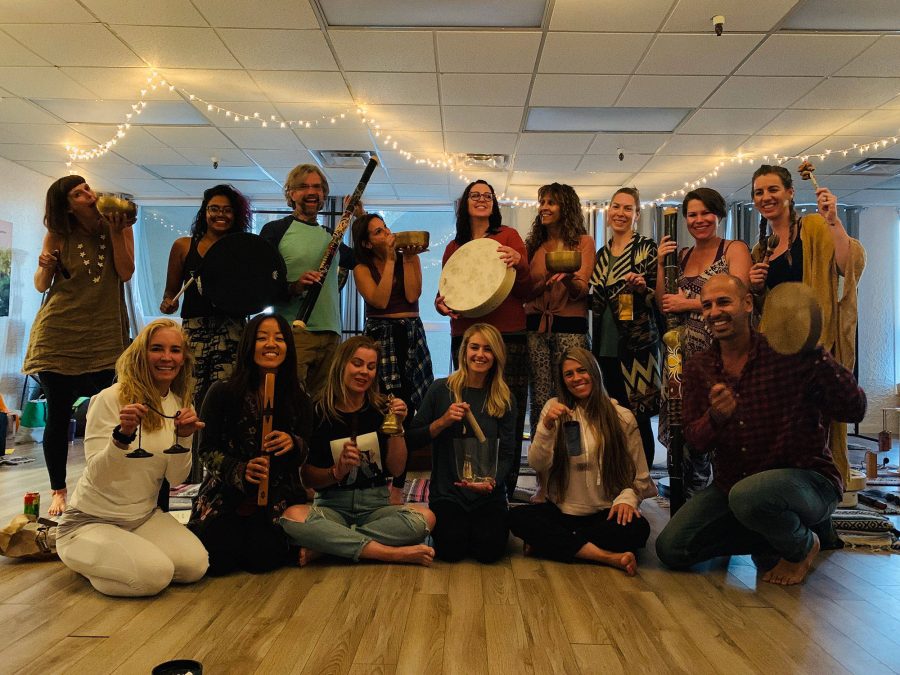
The room, the instruments and the people
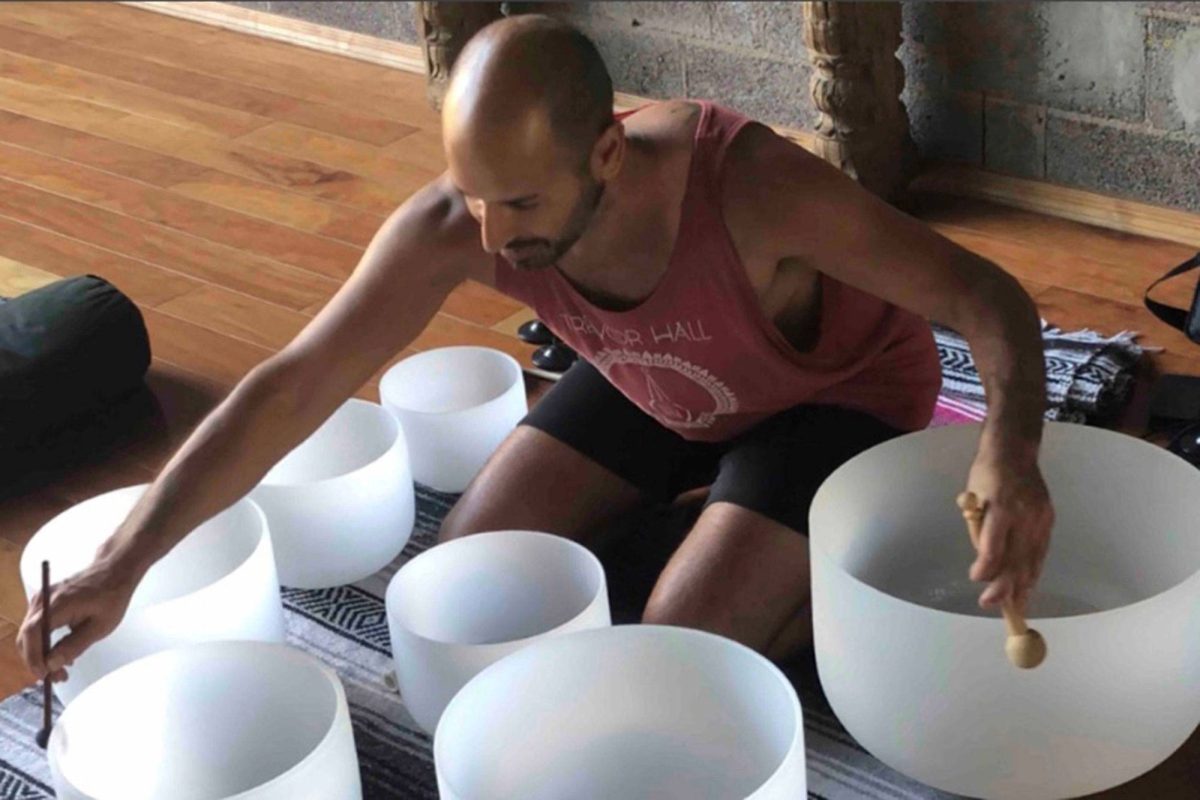
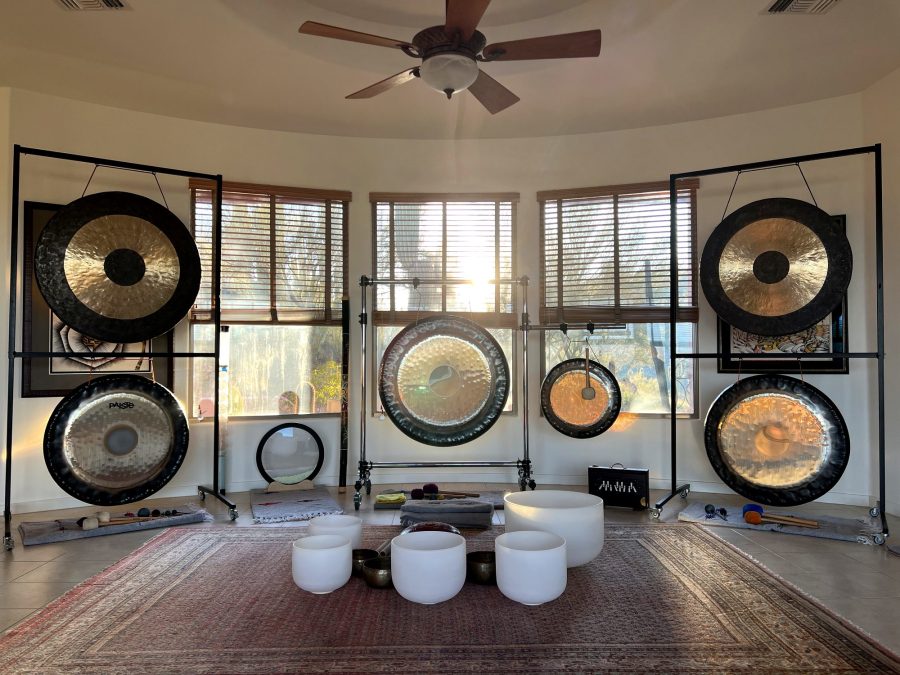
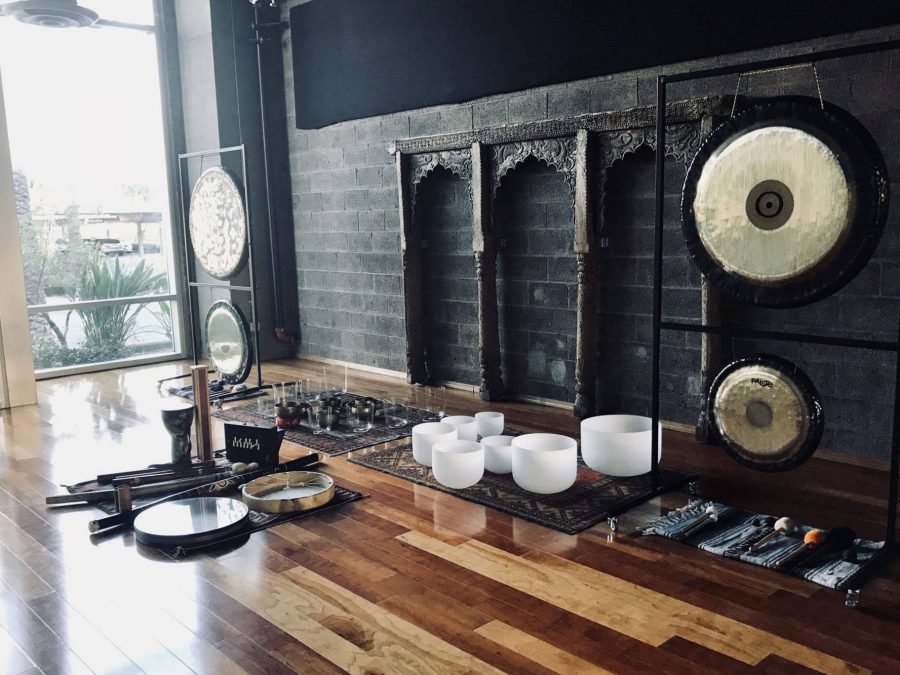
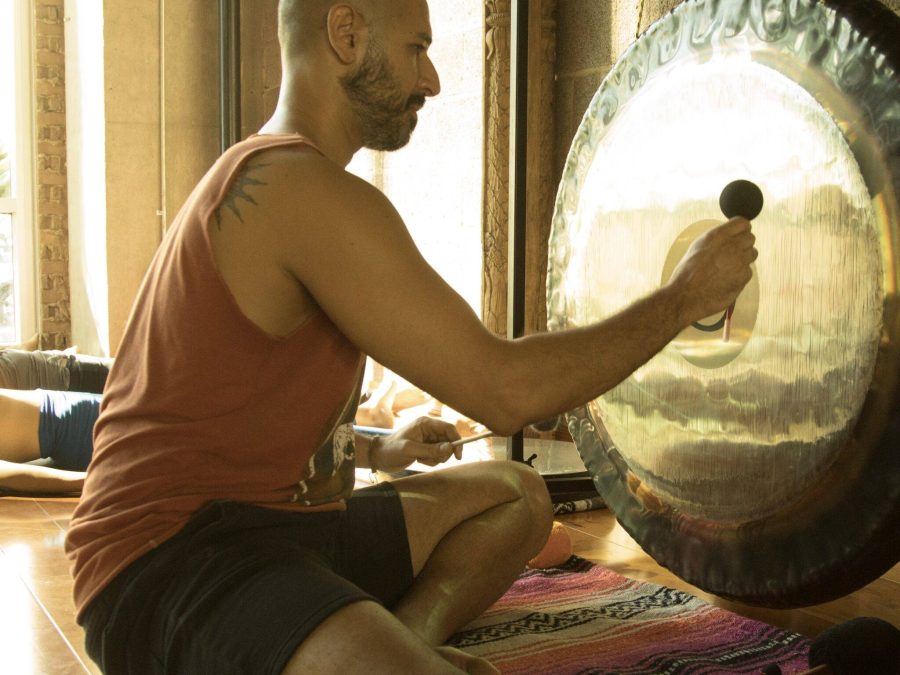
Ordinary clothes, an ordinary floor, and instruments chosen for what they do to the air in a room.
WHAT TO LOOK FOR
Three questions to ask
The opposite of all of the above is somebody who calls it what it is and puts the work back where it belongs, which is with you.
What do you call this, and why
Anybody who has thought about it has an answer ready, and the answer tells you more than the question does.
Who taught you, and what did they get wrong
A practitioner who cannot name a limit anywhere in their own lineage has not looked at it.
What are you still working on
This is the one that separates people. Learn from somebody who knows enough to know they do not know enough.
“Sound holds your attention. You do the rest. Anybody telling you the order runs the other way is selling you something.”
HAMID
WHERE TO START
Come and hear it
The quickest way to know what this is when nobody is performing at you is to lie down in a room while it happens. Gatherings run around Phoenix most months.