History and theory
Where sound sits in yoga and in shamanic practice, how harmonics and overtones behave, why non equal temperament matters, and how to talk about this work without overclaiming what it does.
The Sound Practitioner Training, Level I, is thirty two hours in person across two weekends, in a small group, with real time on every instrument.
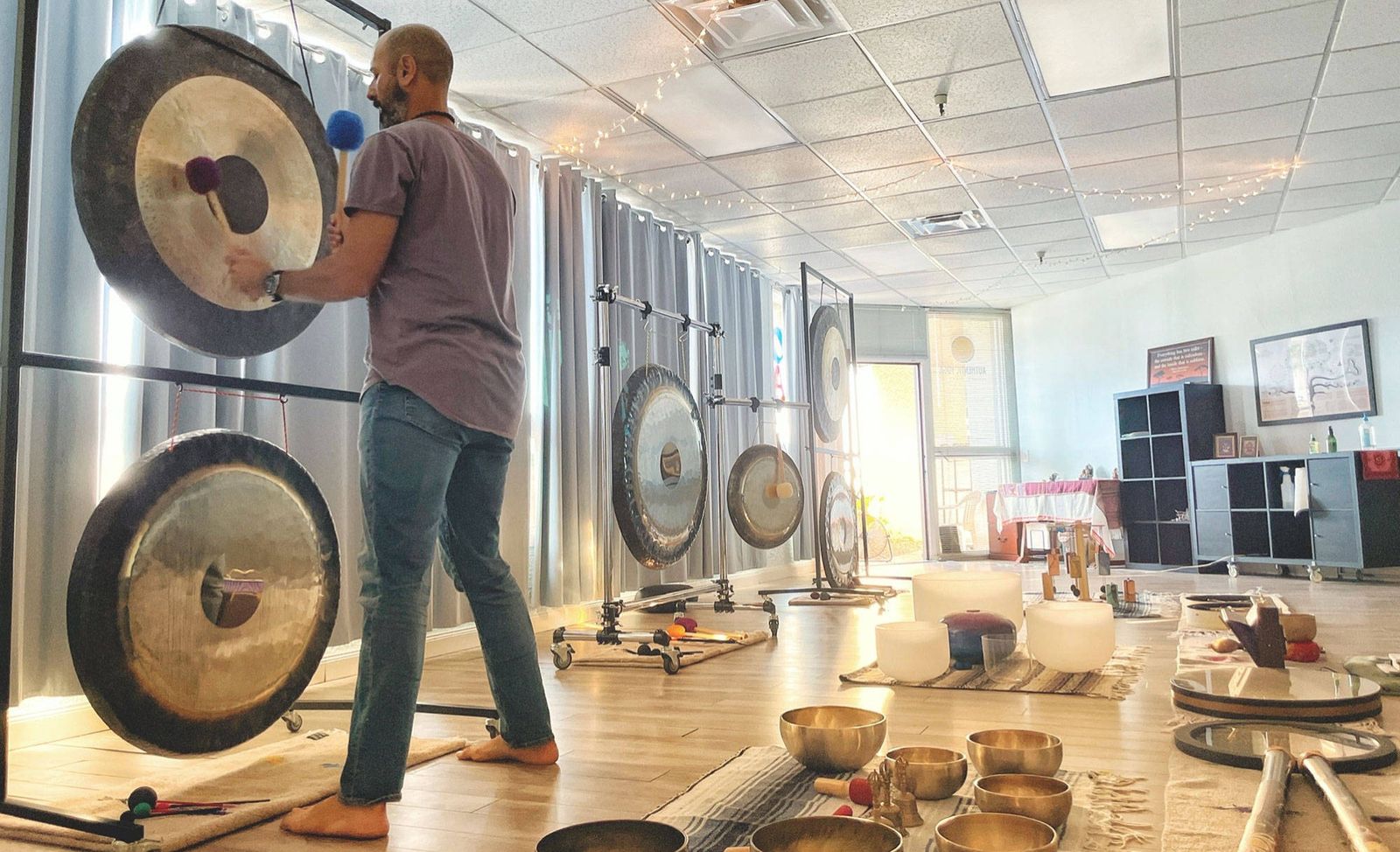
Two weekends in person, with the whole collection of instruments in the room. History, theory and how sound actually behaves, then your hands on every instrument the training covers.
By the end you have run sessions rather than watched them, for a group and one to one. Teachers of yoga and meditation spend part of it working on how sound fits a class they already hold.
Gongs on stands, crystal and metal bowls, frame drums, chimes, shruti box, harmonium and flutes, laid out where you can reach them, so you pick up the next instrument yourself.
That is most of the reason the group stays small. Twenty people cannot all have their hands on a gong, and a training where you queue for a turn is a training where you go home having watched.
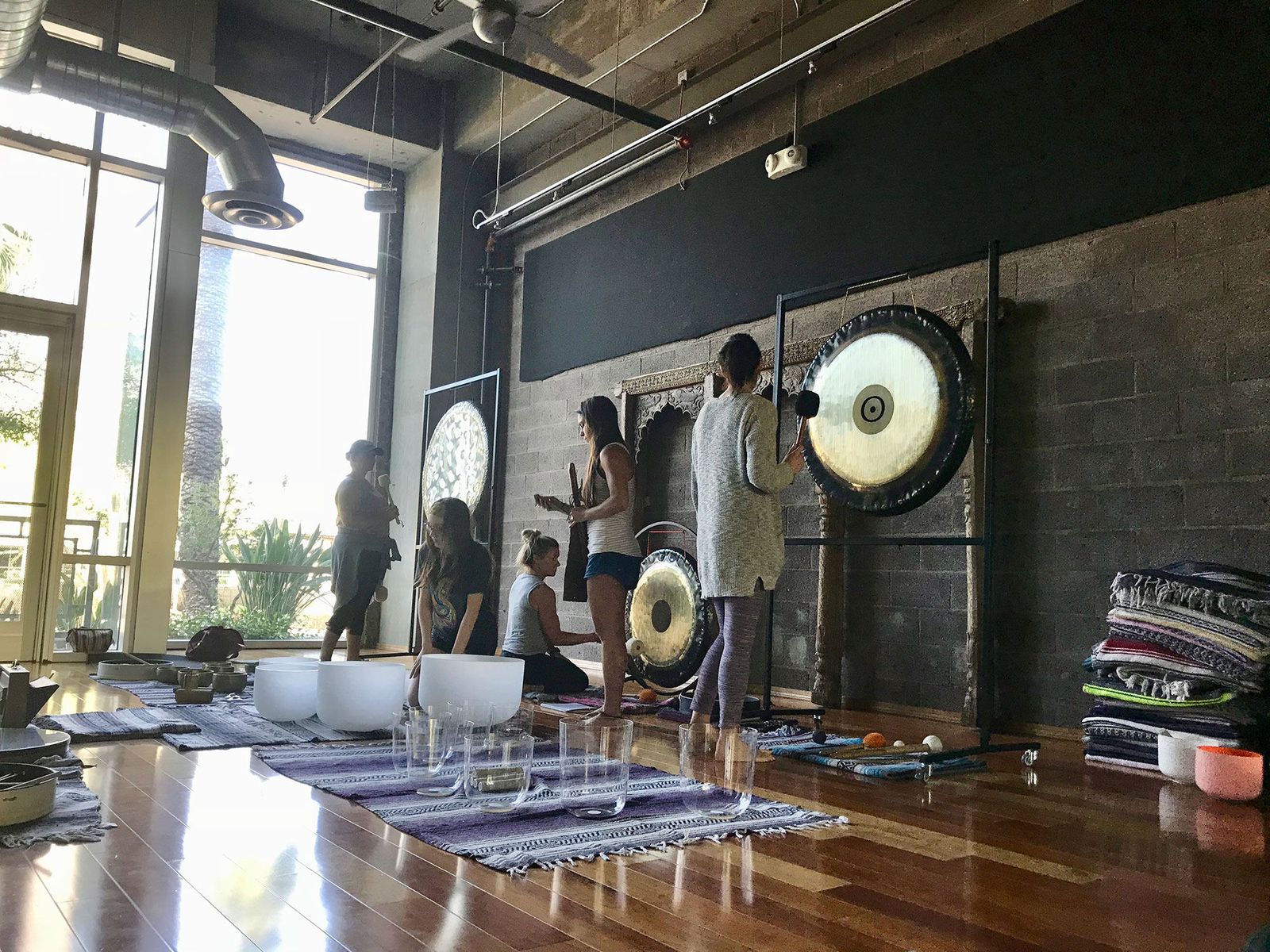
Two kinds of people take this. Yoga and meditation teachers who want to bring sound into a room they are already holding, and people with no teaching practice at all who are drawn to sound and want to learn to hold space with it.
There is no audition and no prerequisite. Everything starts from the beginning, and the group is small enough that Hamid can see what your hands are doing.
What a training calls this work is one of the things worth checking before you pay for one.
Lead a public sound meditation, start to finish, and sit with one person to hold a private session.
Play gong, bowls, shruti box, flutes and chimes with intent, and choose your own instruments and take care of them.
Bring sound into a yoga or meditation class you already teach.
Six areas, and every one of them ends with the instrument in your hands.
Where sound sits in yoga and in shamanic practice, how harmonics and overtones behave, why non equal temperament matters, and how to talk about this work without overclaiming what it does.
Types of gong and where they come from, the thirty nine strokes, friction mallets, hand techniques, gong meditation, caring for one, and how to choose your own.
Crystal and metal, playing techniques and styles, holding a drone, binaural playing, toning and chanting into a bowl, and how to assemble a set that works together.
Frame drum technique and rhythm, drumming for journeying, playing for yourself and for a room, and the rest of the percussion: shakers, rattles, ocean drums, rain sticks.
Finding your voice even if you are certain you cannot sing. Mindful singing and chanting, overtone singing, and singing over a shruti box or a bowl.
Where flutes come from, how to play the Native American style flute, an introduction to the overtone flute, and playing flute with another person.
If you are thinking about buying, Hamid will help you choose. Crystal bowls are where most of that money gets spent badly, so he has written out what to listen for before you buy one.
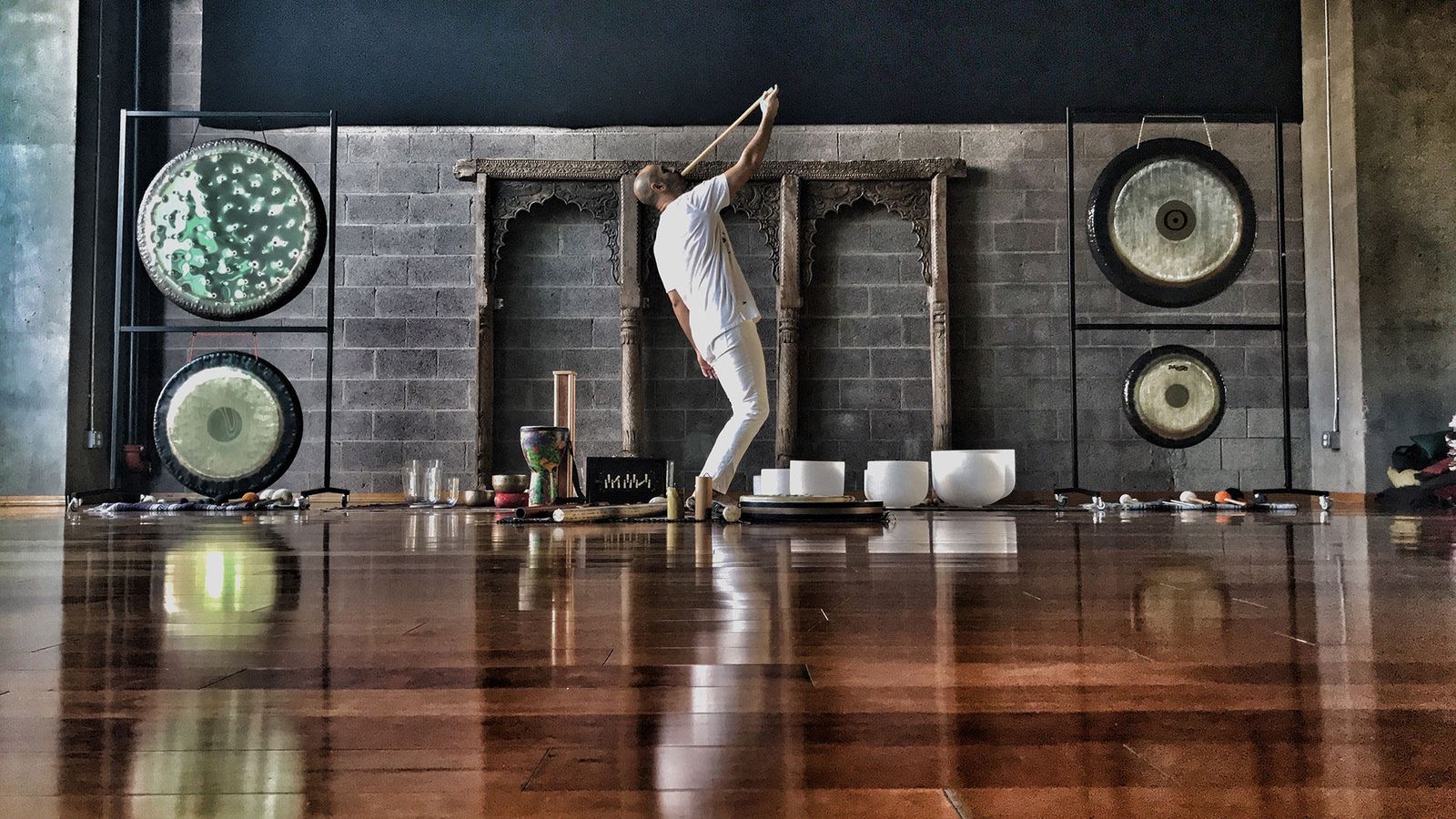
“The measure of a weekend like this is not what you heard while you were here. It is whether you can sit down in front of a gong on a Tuesday, on your own, and know what to do next.”
Hamid Jabbar
Over 20 hours of self paced video covering the history, the theory and the playing, on the same instruments that are in the room at the training. Start it today and take as long as you want over it.
Self paced video, wherever you are. Start it the day you enroll.
It runs thirty two hours in person, across two weekends.
Already working with sound? Advanced Level II goes further, and Sound Mentorship is built around where you actually are.
Studios that want this training taught in their own room can get in touch.
The next run is announced in the newsletter and on the events page, with its dates and place, and registration opens then. When a run fills, there is a waitlist, and people do come off it.
To ask about the next run, get in touch with Hamid.
Finishing the training carries a certificate of completion, and Yoga Alliance continuing education hours, for anyone who needs the documentation for a studio or a venue.
Graduates and mentees Hamid recommends, who have chosen to be listed, are in the practitioner directory.