
CRYSTAL BOWLS

Who really makes crystal singing bowls

A federal court in Utah is hearing a case between one of the best known crystal bowl brands and the factory that has been making its bowls for more than twenty five years. The filings are public, and they are the clearest look anybody outside the trade has had at how these instruments are really produced.

Brand is not maker

One company runs the furnace and another puts its name on the bowl.

It is a crucible

The manufacturer says its bowls and its industrial crucibles are one object.

Alchemy is a finish

Both companies describe the colour as something added to the quartz.

Nothing is decided

The court has refused an injunction and found against nobody.

THE CASE

What is actually being argued

Crystal Tones sells crystal singing bowls out of Utah and is one of the names a beginner meets first. Pyromatics is an Ohio company that has been making fused quartz since 1975, most of it for semiconductors, fibre optics, solar panels and laboratories. Pyromatics has been making the bowls Crystal Tones sells since the late 1990s.

In March 2025 Crystal Tones sued Pyromatics, a former employee, and a new brand called Divine Bowls, saying they had taken its trade secrets and set up a competitor. Pyromatics sued back, saying the manufacturing process is its own, that it was making these bowls before Crystal Tones existed, and that Crystal Tones has been telling customers it manufactures bowls it in fact buys.

Where to find it

It is Crystal Tones, LLC v. Pyromatics Corp., case number 2:25-cv-00235, in the United States District Court for the District of Utah. Everything on this page comes from documents filed in it, and the two that matter most are the amended complaint of May 2025, the amended counterclaim of September 2025, and the court’s own order of February 9, 2026.

The case was still running when this page was written, in September 2026, with an answer to a second amended complaint filed days before. Nothing here is a verdict, because there has not been one.

ONE ACCOUNT

What Crystal Tones says

Its founders had the idea in the late 1990s. Knowing that Himalayan traditions used metal singing bowls, they wondered whether the same thing could be done in quartz, and took the idea to a quartz manufacturer that had never thought about music.

On this account the manufacturer called the idea absurd at first, and said that putting anything else into its quartz amounted to contaminating it. The founders talked it into trying anyway. What followed, the complaint says, was twenty seven years of work for hire: Crystal Tones supplied the direction and the manufacturer supplied the furnace, and Crystal Tones kept the intellectual property in the result.

What it says went wrong

The complaint says a former employee who had been taught the business from the inside went to the manufacturer behind its back, that the two of them broke off an acquisition Crystal Tones believed was still live, and that they launched a rival brand using Crystal Tones bowls in its first photographs.

It brought nine claims: trade secret theft under federal and Utah law, three breaches of contract, trademark infringement, unfair competition, trade dress infringement, and cybersquatting over a domain name.

THE OTHER ACCOUNT

What the manufacturer says

Pyromatics tells it the other way round, and its version is the one worth reading slowly, because it is a manufacturer describing its own product under oath.

It says it has made quartz crucibles since 1975, and that from around 1994 several customers were already buying those crucibles and reselling them as crystal singing bowls. One of them advertised itself in 1997 as the world’s largest distributor of singing quartz crystal bowls. Somebody filed a trademark application for chakra tuned singing quartz crystal bowls in December 1994. Crystal Tones did not exist yet, and when it arrived in late 1998 it became, on this account, one more customer.

The sentence to sit with

Its counterclaim puts it plainly: there is no difference between the quartz crucibles it has been making since 1975 and the clear and opaque crystal singing bowls, except what they are intended for.

A crucible is the vessel the silicon industry melts sand in to grow the ingots that become computer chips. If that is right, the instrument at the centre of a great deal of modern spiritual practice is a piece of semiconductor equipment that somebody discovered would sing.

Where the colours come from

On the gemstone bowls, the ones sold as alchemy, Pyromatics says Crystal Tones asked around 2001 whether gemstones could be added, supplied the gemstones, sometimes asked for a particular colour, and supplied nothing else. No formulas, no quantities, no process.

It says it knew adding gemstones would not produce the look that was wanted, so it suggested tinting the quartz to resemble the gemstone instead, and that the colour recipes were worked out in house by a chemist and two ceramic engineers with a background in tinted glass. Crystal Tones denies this and says the finishing process is its own trade secret. What the two of them agree on is that the colour is something added.

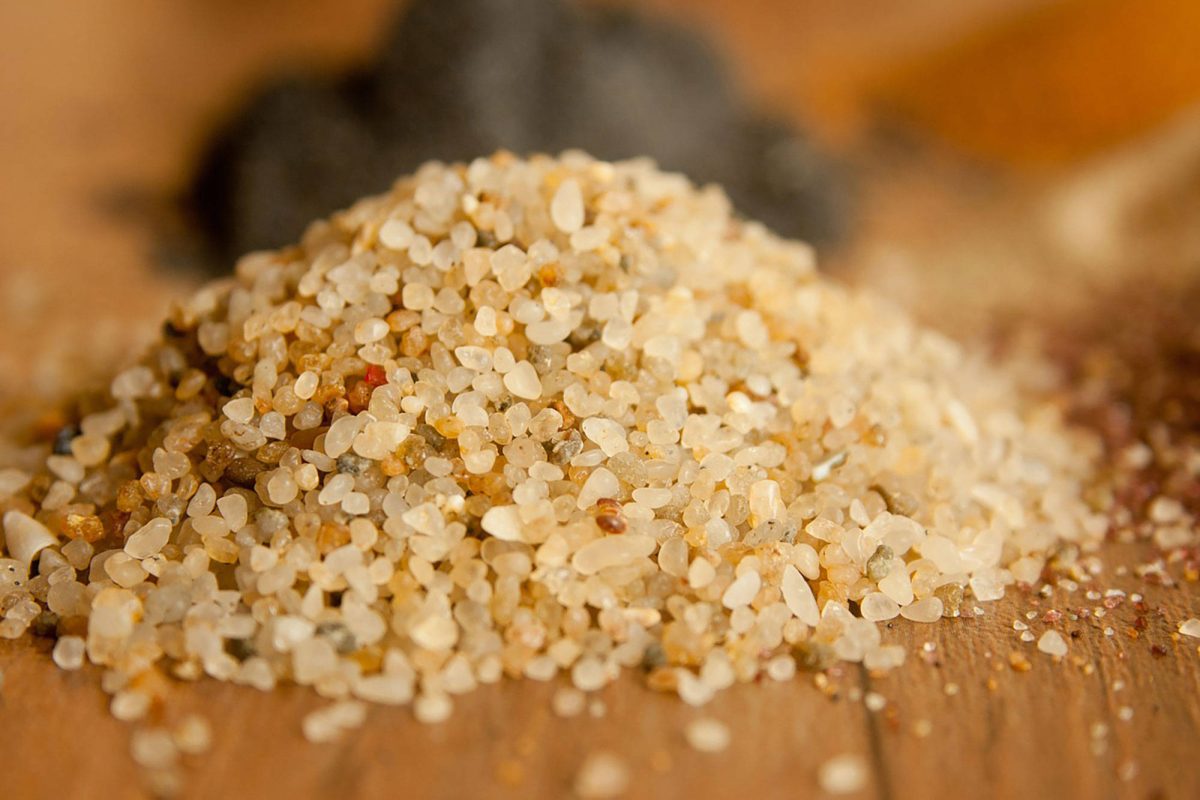
A small heap of pale silica sand grains on a wooden surface, photographed close enough to see individual grains
THE RULING

What the court decided

Crystal Tones asked the court to shut Divine Bowls down while the case ran. On February 9, 2026, after a hearing, the court refused. To win an order like that a company has to show it is likely to succeed on at least one of its claims. The court held that Crystal Tones had not done so on any of the nine.

It also dismissed two of the five defendants for want of jurisdiction in Utah, and left the case running against the rest.

On who owns the process

The court recorded that Crystal Tones accepts the manufacturer was making crystal singing bowls before Crystal Tones existed, and appears to accept that the manufacturer makes the bowls it sells.

It found the trade secret had not been described precisely enough to identify, noting that there are many ways to design and make a crystal singing bowl and that Crystal Tones cannot be claiming a trade secret in every one of them. It found nothing in the record showing that the manufacturer ever transferred its intellectual property, and observed that if the arrangement was work for hire, Crystal Tones does not appear to have documented it as such.

The only signed agreement between the two companies turned out to cover financial information alone. The court noted that it protects nothing about the design or manufacture of bowls, and that it was not signed until 2019, more than twenty years after Crystal Tones started buying.

What this is not

It is not a finding that anybody stole anything, and it is not a finding that anybody did not. A refused injunction means one side did not carry a burden early, on an incomplete record, and the court said repeatedly that these questions need to be worked out in discovery.

Both companies are still trading and both still say the same things about each other.

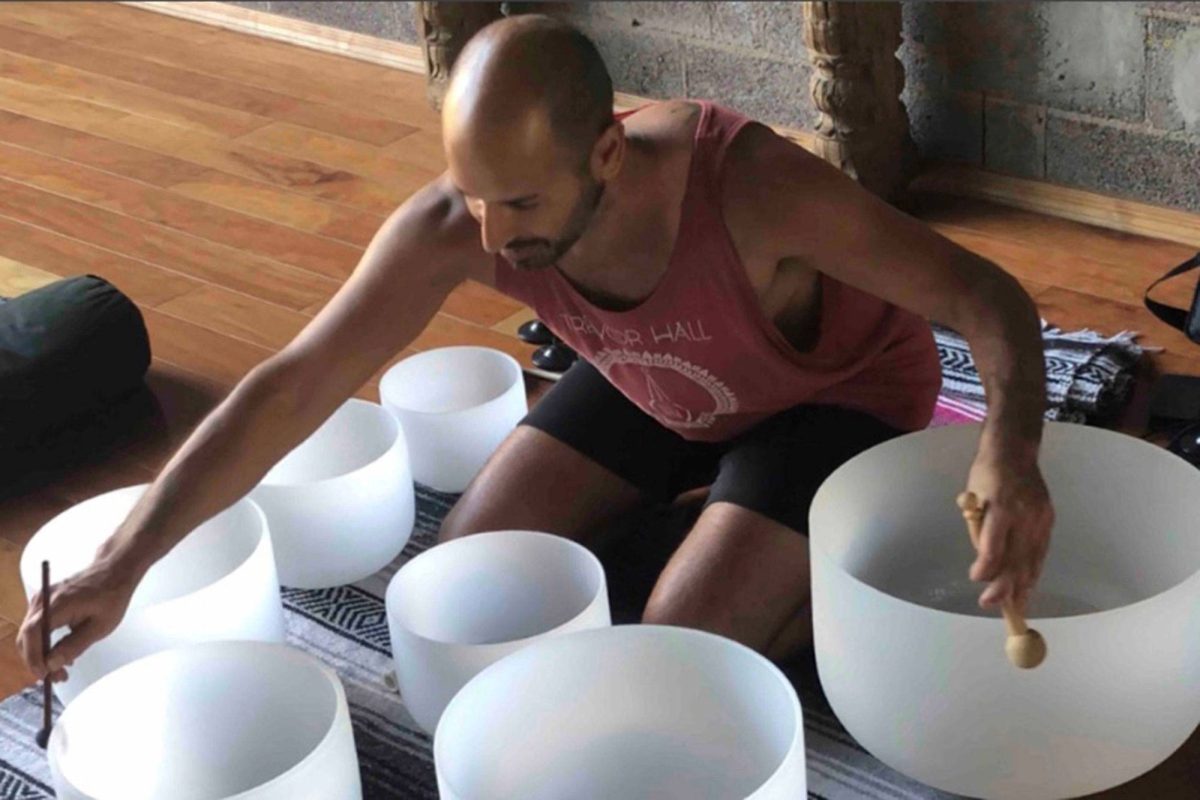
Hamid kneeling over a row of frosted crystal singing bowls with a mallet in each hand
COMMON GROUND

Three things nobody disputes

Two sides who disagree about almost everything agree about these, which makes them the most reliable sentences in the whole docket.

The factory is in Ohio

Crystal Tones accepts it has been buying bowls from Pyromatics since the 1990s and that Pyromatics manufactures them. A good many buyers had understood their bowls were made in Utah.

The process is secret

Both sides say the manufacturing process is confidential and proprietary. They disagree only about which of them owns it, which is the entire case.

Nothing has been proven

Crystal Tones accepted in its own filing that it had no ruling that anybody had taken anything. It has one now, and it went against it.

FOR A BUYER

What this changes about your bowl

The useful part is not who wins. It is that a manufacturer told a court its singing bowls and its industrial crucibles are the same object, and that the brand selling them did not really dispute who ran the furnace.

So the bowl you own was very likely made by a company whose name is not on it, and somebody else’s bowl at twice or half the price may have come out of the same kiln. The court heard that the manufacturer supplies numerous retailers with similar, and sometimes identical, bowls.

Country of origin turns out to be contested by the two companies who between them made every bowl in question, which is about as strong a reason as you could ask for to stop reading the flag on a listing and start listening to the instrument.

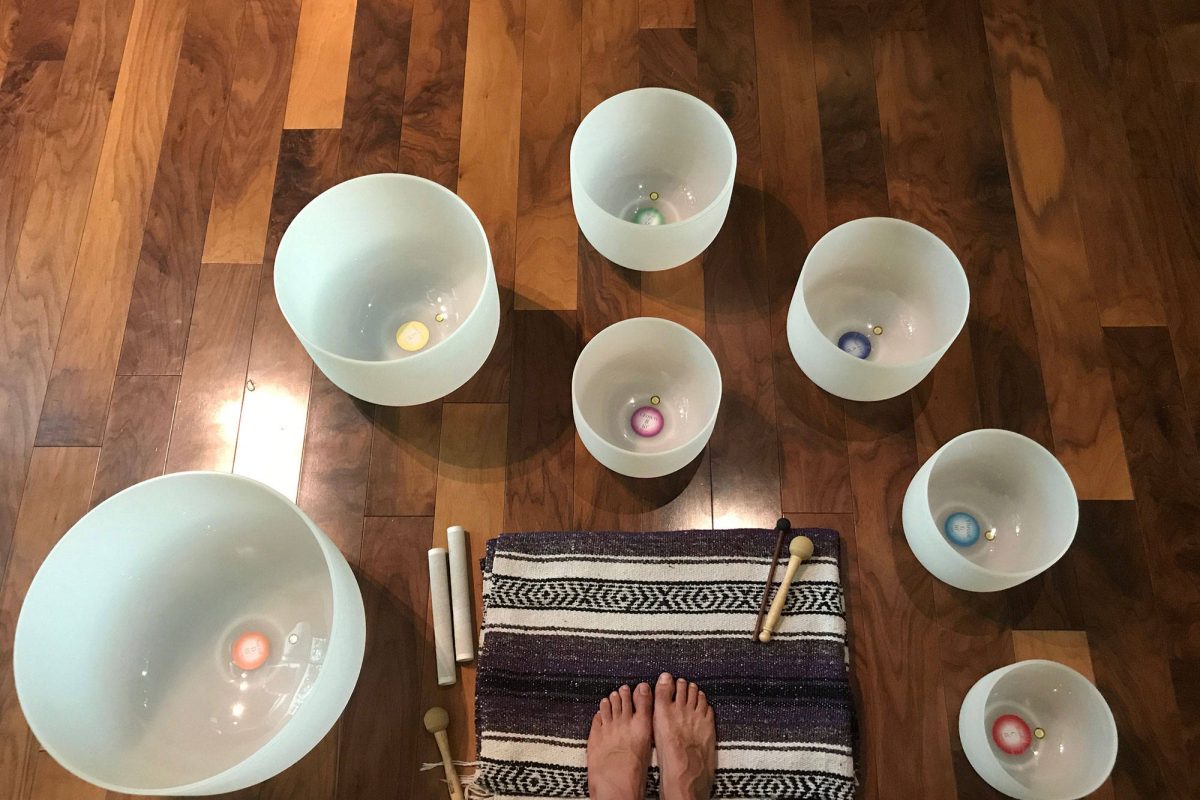
Seven frosted crystal singing bowls arranged in a circle on a wooden floor, each labelled with its note and chakra
NAMES

Who owns a word like divine

Part of the case is a fight over the word divine, which Crystal Tones has used in bowl names for years and which the new brand used in its company name. The court was not persuaded. It noted that the word appears to be used widely across the crystal singing bowl trade, that Crystal Tones had not shown it was the first to use it, that it had put forward no evidence the word has come to mean Crystal Tones in a buyer’s mind, and that it acknowledged having no evidence of anybody actually being confused.

The word describes what the bowls are supposed to be rather than who made them, and a word like that is hard for anybody to own.

The one about sound baths

Separately, and not part of this case, Crystal Tones registered a service mark on the word soundbaths in February 2026. Anybody who runs gatherings and hears that will worry, so here is exactly what registered.

It is a design mark rather than the bare word, it sits in the class for retail services, and what it covers is online retail store services featuring musical instruments and singing bowls. It is a registration about running a shop. Nothing in it stops anybody calling an evening a sound bath, and in this very case the manufacturer has argued that Crystal Tones marks are invalid as generic. Registering a word is not the same as owning it.

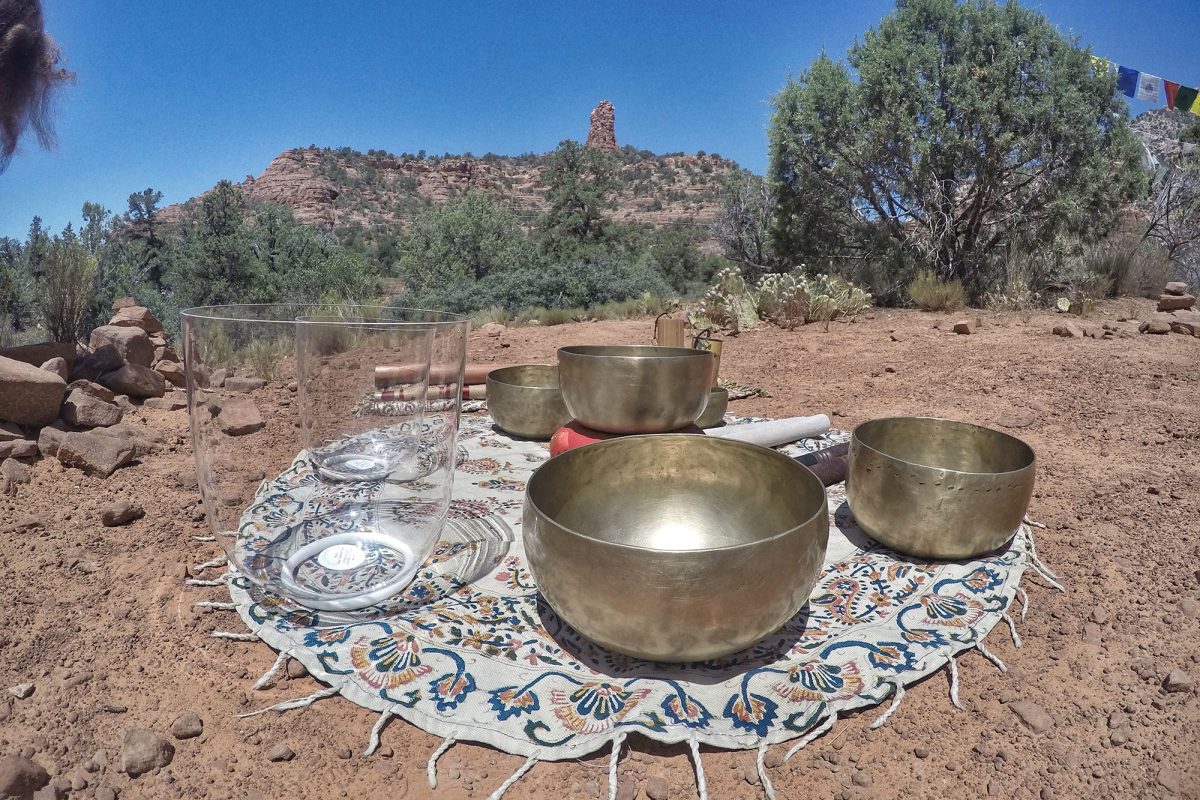
Two clear quartz singing bowls beside hammered brass Himalayan bowls on an embroidered cloth in the red rocks
“Knowing where a bowl came from has never once changed what it does in a room.”
HAMID JABBAR
NEXT

None of this makes a bowl sound worse

If you have just learned that your alchemy bowl is a tinted crucible with a story attached, you still own exactly the instrument you owned an hour ago. What changes is what you pay attention to when you buy the next one, which is the whole subject of the bowl guide.