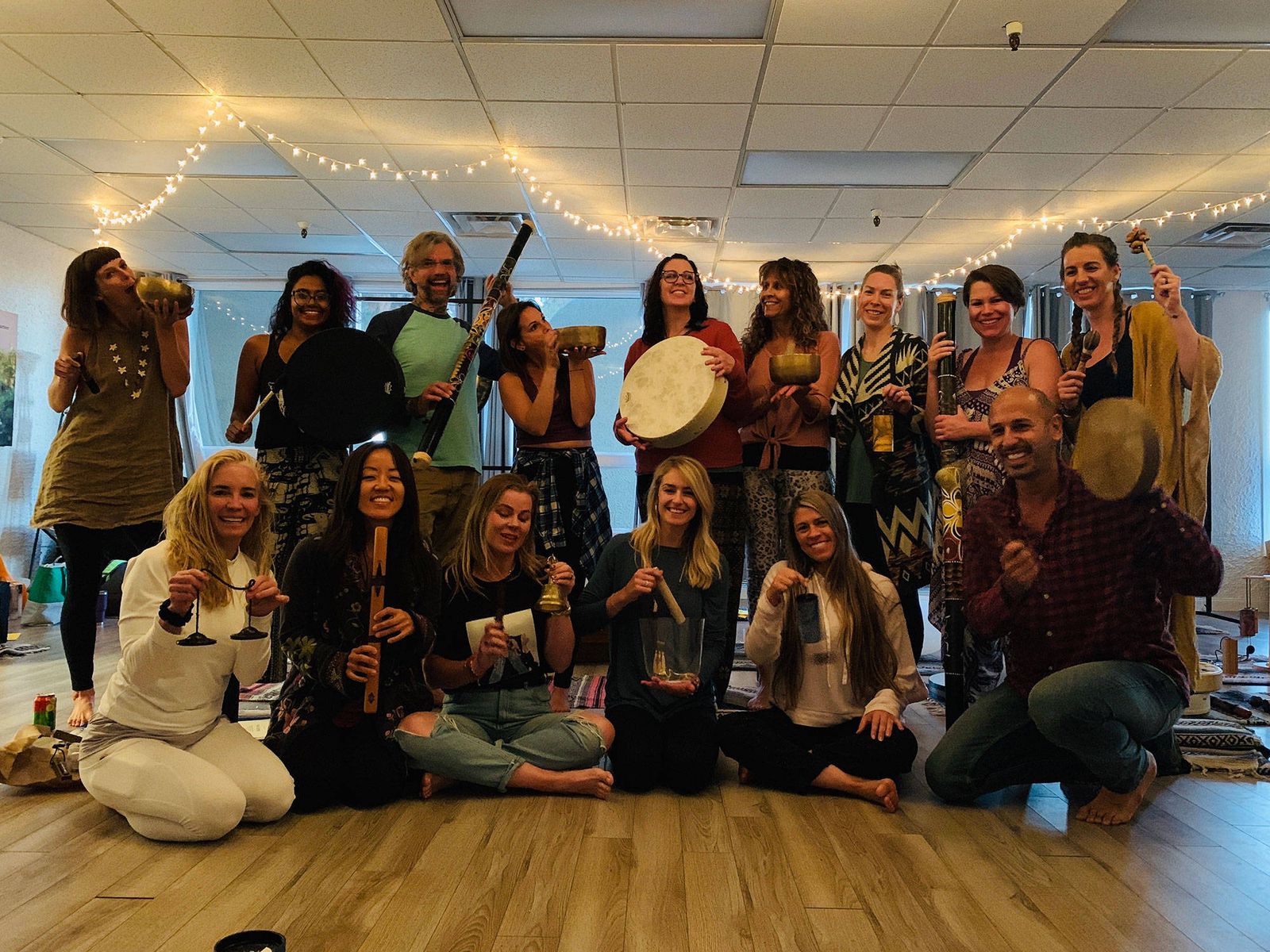
Teachers and bodyworkers
Yoga and meditation teachers bringing sound into a room they already hold. Bodyworkers adding it to what they offer.

A sound practitioner holds space with sound, for a room of people or for one person at a time.
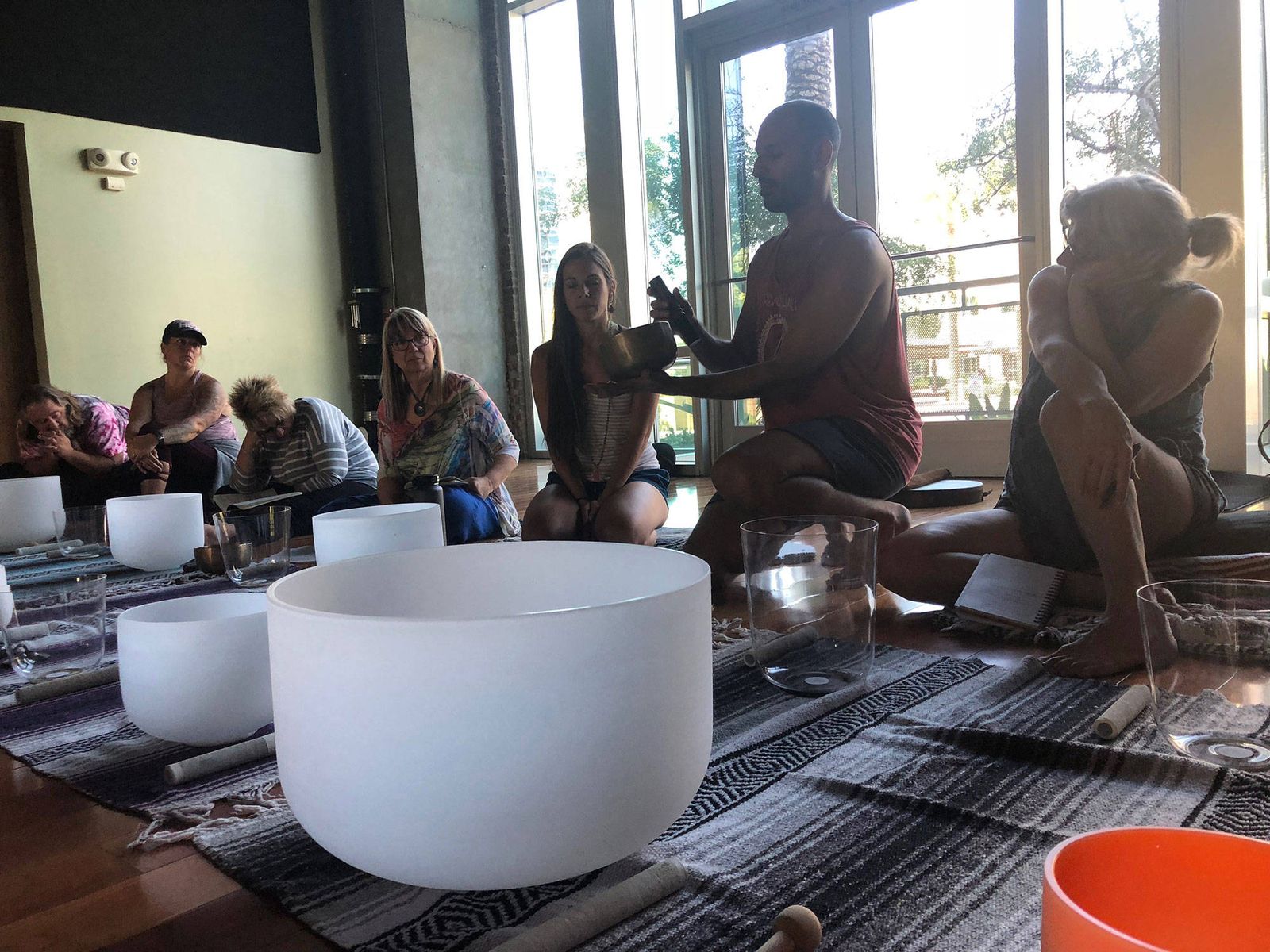
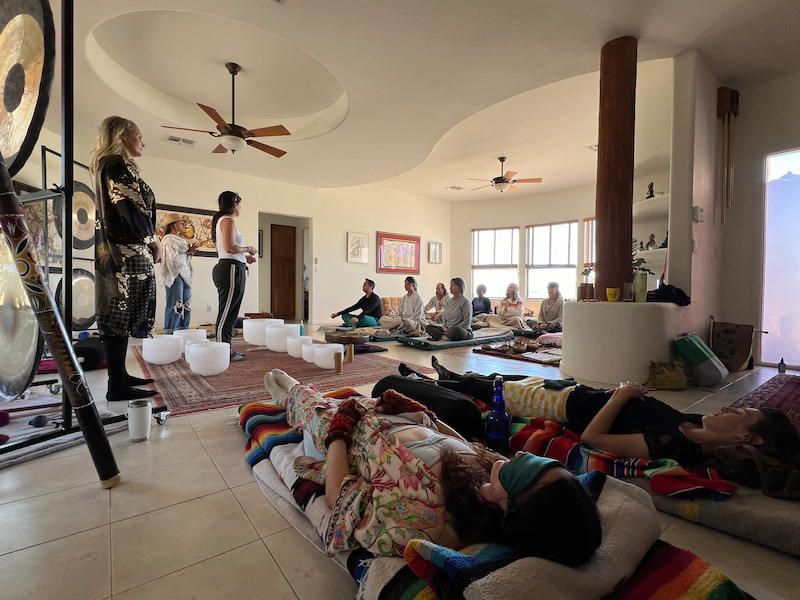
For a group, that means leading a sound meditation from start to finish. For one person, it means sitting with them and holding a private session.
Either way, the person on the floor is the one doing the work. What sound gives them is something to hold their attention that is not their own thinking. Everything after that is theirs.
Practices with sound encourage and train active, attentive listening, not just hearing, which develops awareness and insight. Hamid calls it sound meditation because you are participating rather than receiving.
The job of the person with the mallet is to keep the conditions good and then get out of the way.
Hamid Jabbar
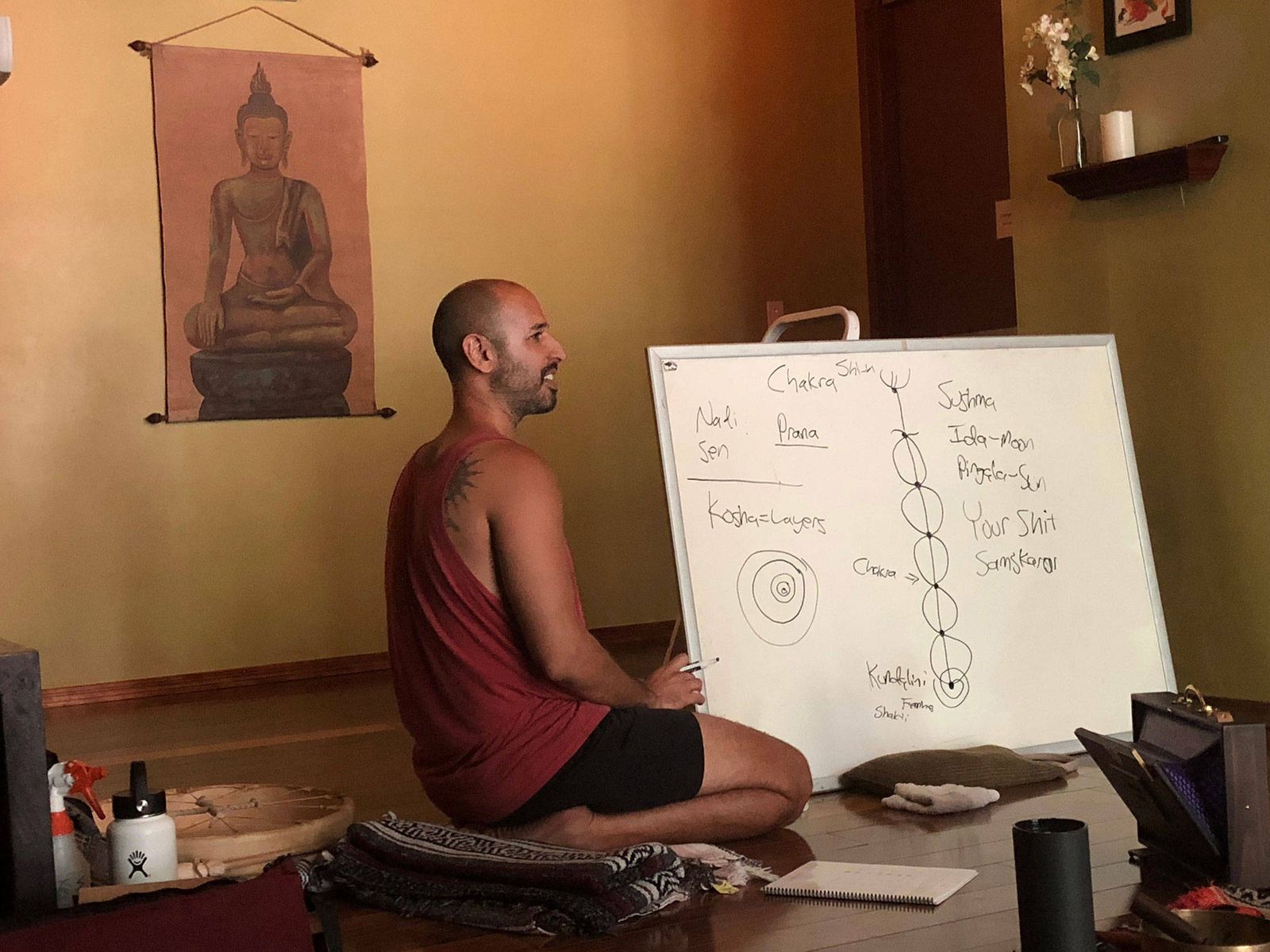
History and theory first, then harmonics and overtones, then hours of playing. The theory is the science, the history and the music a sound practitioner actually needs.
The instruments are gongs, crystal and Himalayan bowls, bells, chimes, frame and hand drums, rattles, rain sticks, ocean drums, shruti box, Native American style flute, and your voice. Every one of them gets its own lesson.
Then the work itself: conducting a one to one sound session, and holding a session for a group. Teachers of yoga and meditation spend part of the training working on how sound fits a class they already hold.
You do not need to read music and you do not need to sing well. There is no audition and no prerequisite. Everything starts from the beginning.
“By Level II the technique is mostly there. What is left is knowing when not to play, and that is the part that separates a session that lands from a session that is merely loud.”
Hamid Jabbar
You do not need to be a musician. Two kinds of people take this training.
Yoga and meditation teachers bringing sound into a room they already hold. Bodyworkers adding it to what they offer.
People with no intention of teaching anybody, who want to know what they are doing when they sit down in front of a gong.
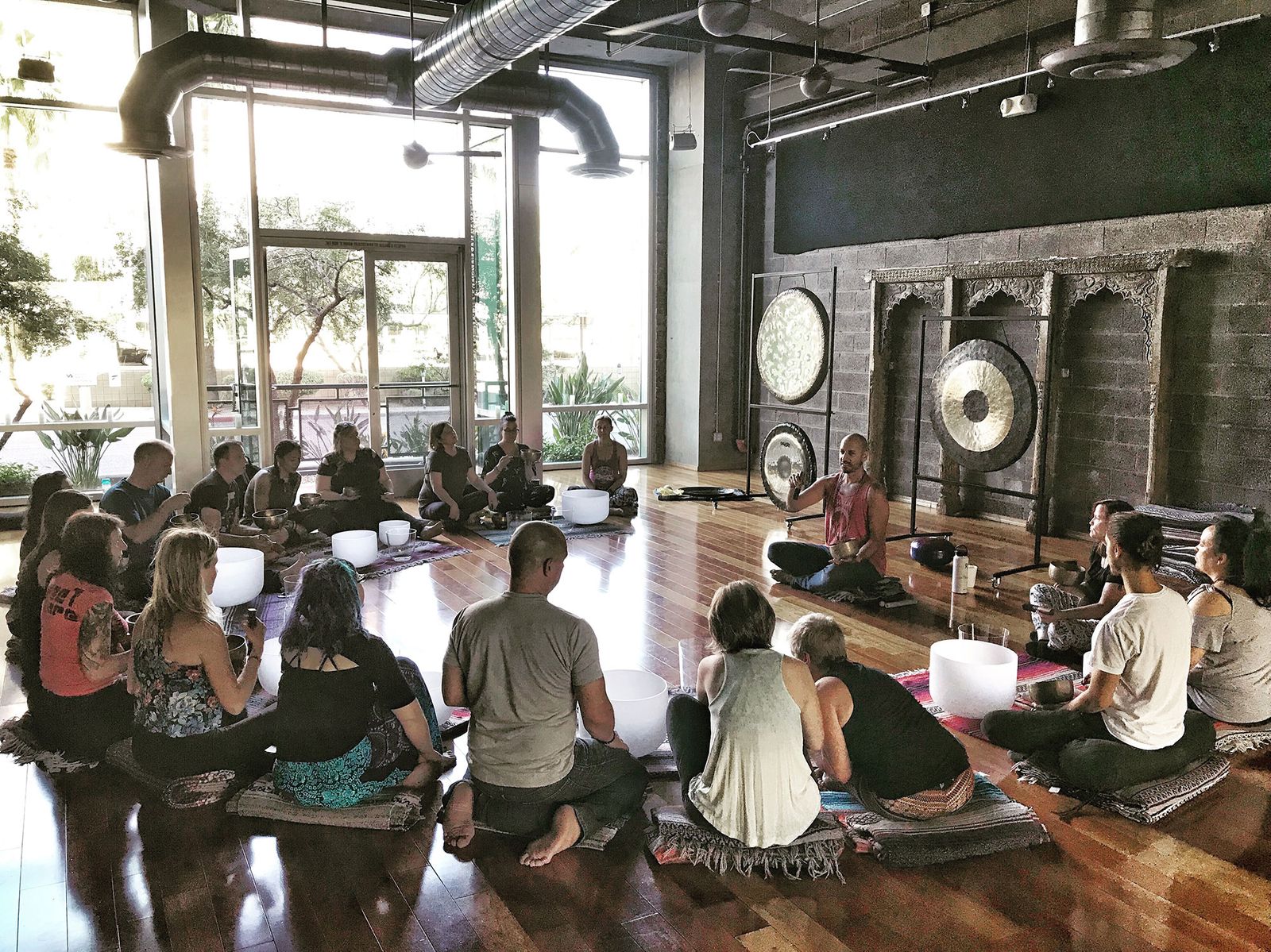
Train with the instruments in your hands, then hold sessions for people. Most of what comes after a training is going out and doing it: practicing, refining, listening, learning to hold a room.
The online course carries the whole of Level I, so you arrive at the in person training already fluent in the theory.
Begin
The whole of the Sound Practitioner Training, Level I, at your own pace and in your own place. Over 20 hours in fourteen modules, the training manual to keep, and $298, paid once.
Deepen
Thirty two hours in person across two weekends, in a small group, with real time on every instrument. By the end you have run sessions rather than watched them, for a group and one to one.
Continue
Forty hours for practitioners already working with sound: two weekends in person, four integration calls after them, and a practicum you design. Or work one to one with Hamid in Sound Mentorship, shaped around you.
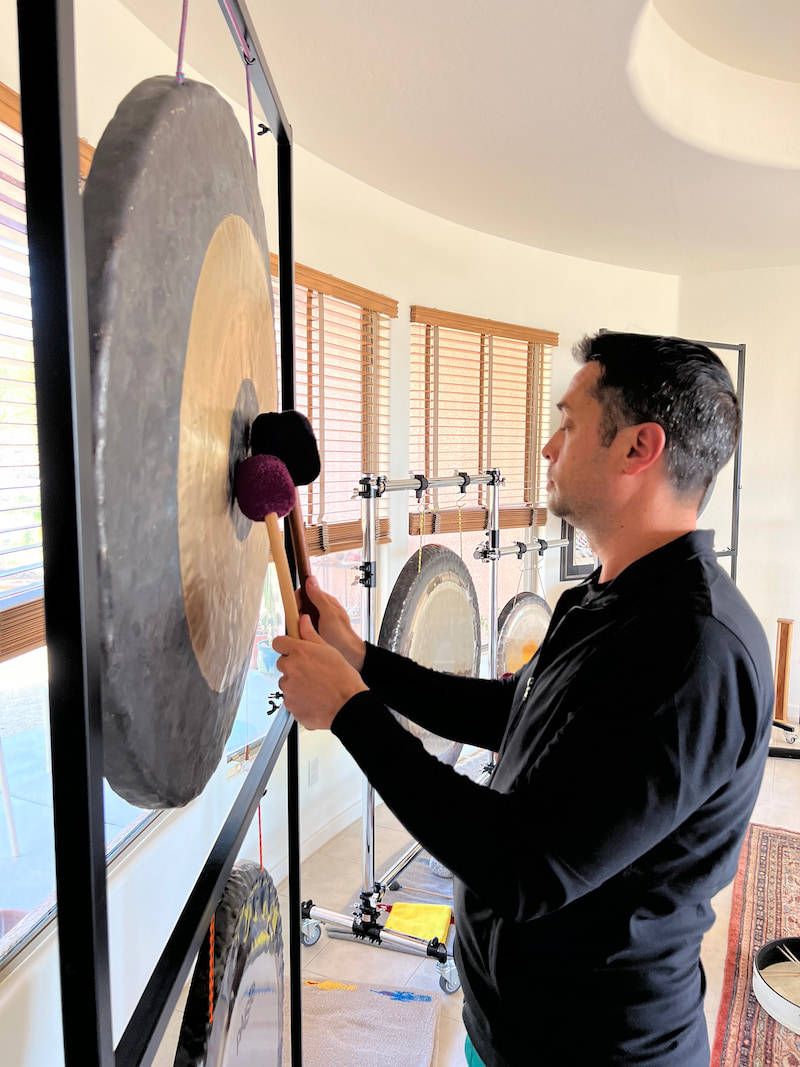
Yes. Finish the online course and its assessment and you get Sound Practitioner Level I certification.
| Online course | Sound Practitioner Level I certification. The course also carries 20 hours of Yoga Alliance continuing education, with a certificate of its own when you pass the written evaluation. |
|---|---|
| Level I, in person | A certificate of completion, and Yoga Alliance continuing education hours. |
| Level II, in person | A certificate of completion, and Yoga Alliance continuing education hours. |
The in person certificates are there for anyone who needs the documentation for a studio or a venue.
Many schools would call this a sound healing training. Hamid does not use the term sound healing, because the term is deceptive. It is still the name most people know, and what he teaches is how to do this work with care and intelligence.
What a training calls this work is one of the things worth checking before you pay for one.
“I would not want a training to ban the phrase. I would want it to spend at least ten minutes discussing why the term is problematic.”
Hamid Jabbar
$298, once. Take it in a weekend or take a year over it.