What Sound Looks Like

Ever wonder what sound waves look like? With our naked eyes we cannot see the waves of sound moving through the air for a few reasons.

First, sound travels at 1,126 ft/s or 761 mph.

Second, the air itself that sound is moving through is invisible to our eyes.

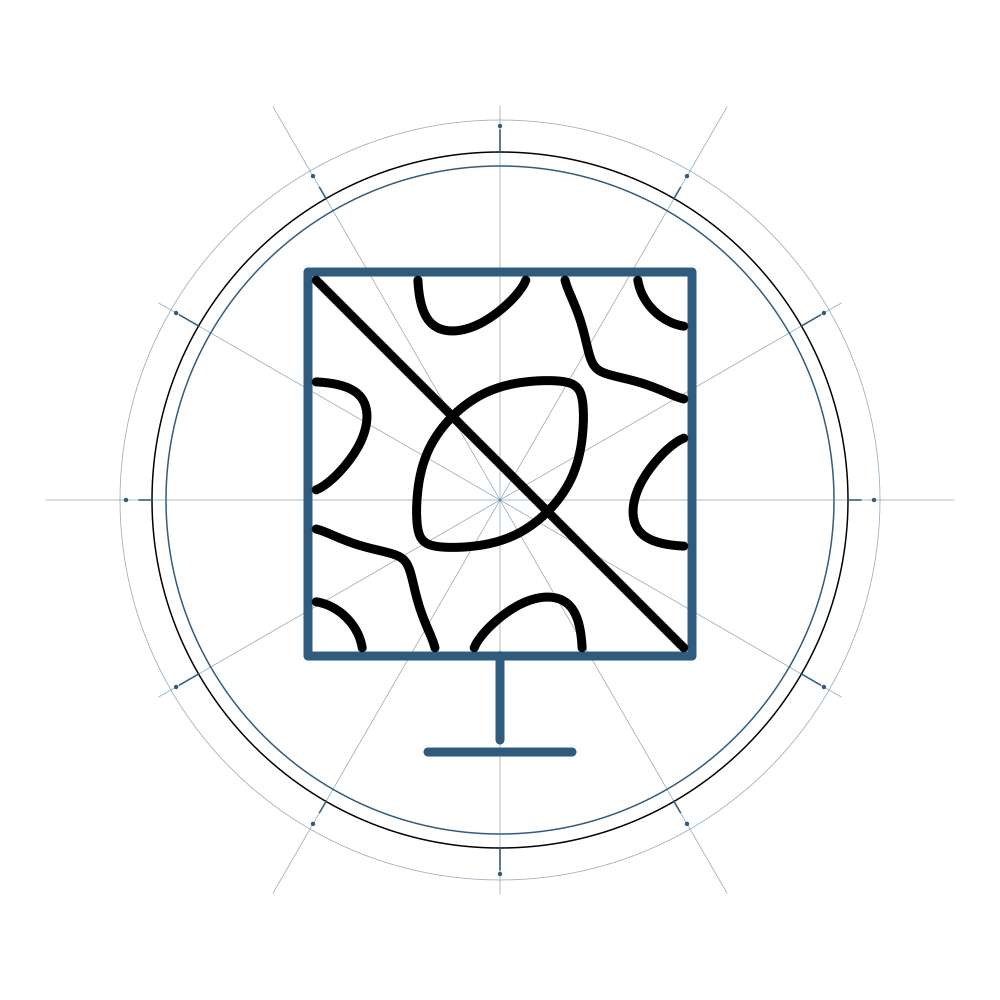
Sand on a square plate gathered into the lines where the plate stands still, set out with compass and set square

Using a technique called Schlieren Flow Visualization, we are now able to see actual sound waves move through air. These are not graphic depictions or digital representations. They are actual waves moving through space. Ready to have a look?

This video contains a nice explanation of Schlieren Flow Visualization and some high speed videos of actual sound waves.

What Does Sound Look Like? from NPR on YouTube.

Why Sound Meditation Works?

With this technology enabling us to see sound, it’s easier to appreciate that sound waves traveling through air actually impact and vibrate our bodies. Every cell in our body is vibrated by the sounds received during a sound meditation session. This is why I often call sound meditation a form of massage. It’s like receiving a massage from the atmosphere around you that also soothes the nervous system.

Cymatics: Sound Drawn in Sand

The film above shows sound moving through air. Cymatics shows what sound does to something solid that it sets ringing.

Scatter fine sand on a thin metal plate and make the plate sing, with a violin bow drawn along its edge or a speaker underneath it. The sand jumps, then settles into a figure.

A plate ringing at one of its own notes holds a standing wave. Some parts of it swing up and down, and the lines between them hardly move. The sand is thrown off the moving parts and comes to rest on those still lines, called nodal lines. The figure is a map of where the plate stands still.

Each note the plate rings at has its own figure. The higher the note, the more parts the plate divides into, and the more lines the sand draws.

Four square plates, each with the line its sand gathers on, simple at the left and with more lines at each step
One square plate and four of its figures, each from a higher note than the one before. The sand lies along each line.

From Flour on Glass to Cymatics

On July 8, 1680, Robert Hooke drew a violin bow along the edge of a glass plate covered in flour and watched the flour gather into patterns.

In 1787 the German physicist Ernst Chladni published the method in Discoveries in the Theory of Sound, with sand on metal plates. The figures are still called Chladni figures.

When Chladni showed them in Paris, Napoleon urged the Academy of Sciences to offer a prize for a mathematical explanation. Sophie Germain won it in 1816, on her third attempt, the first woman to win the Academy’s grand prize in mathematics.

The name cymatics comes from the Swiss physician Hans Jenny, who photographed and filmed sand, pastes and liquids as they vibrated. His first book on it appeared in 1967, and he took the word from the Greek kyma, a wave.

How GongSpace’s Art Is Drawn

The sand figures on GongSpace, Hamid’s site for sound baths, come from the same physics. A short program draws them, not a hand or a camera.

A round plate, like the face of a gong, rings with still lines through its center and still rings around it. The mathematics of a ringing round plate places them exactly: a Bessel function across the radius, and a wave around the circle.

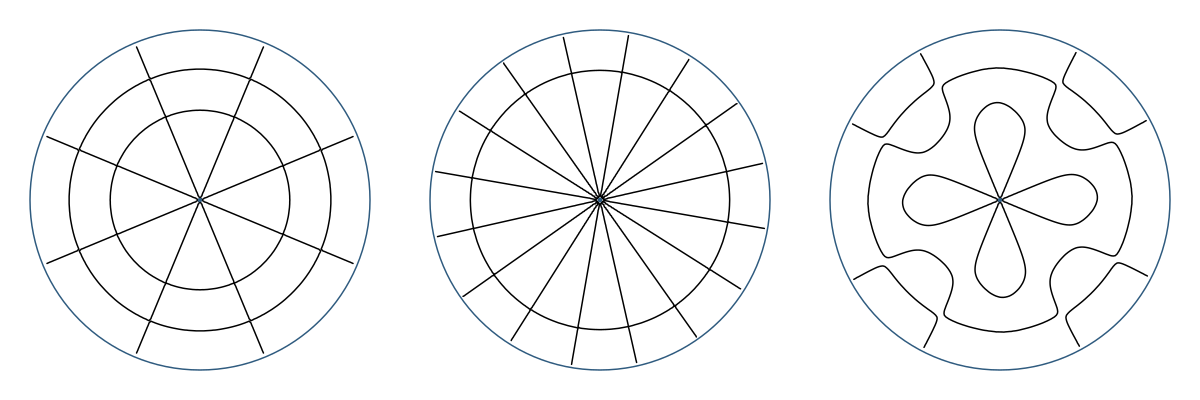
Each figure lays two of these ways of ringing together. The program then scatters sand at random, keeping each grain in proportion to how still the plate is where it falls, so the sand finds the still lines as it would on a real plate.

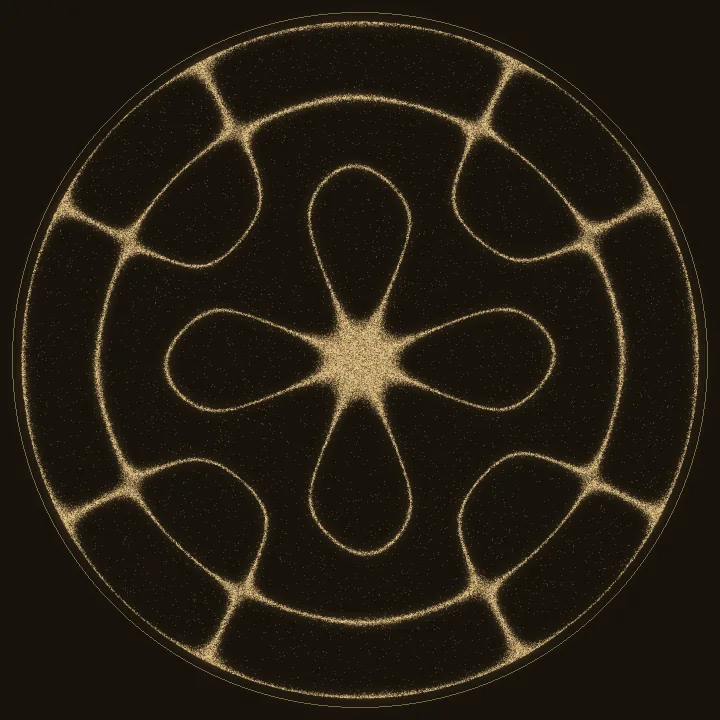
Fifteen figures are drawn this way, each from its own pair, so no two are alike. The gold is the lit face of a hammered bowl in one of Hamid’s photographs. Nothing is bought or traced, and the same numbers draw the same figure every time.


GongSpace's figure for its guide to leading a sound bath: gold sand on a dark round plate, four petals at the center inside a ring, lines running out to the rim
GongSpace’s figure for its guide to leading a sound bath, in gold sand.
Three round plates. The first has four lines through the center and two rings, the second eight lines and one ring, and the third the curving line where the two together leave the plate still
How that figure is made, from left to right. One way the plate rings, with four still lines through the center and two still rings. Another, with eight lines and one ring. Then both at once, and the line where the two together leave the plate still. That line is where GongSpace’s sand gathers.

The square plate that opens this essay is drawn from the same mathematics. The Sound page goes further and draws Hamid’s own gong from twenty seconds of a recording of him playing it.

See the figure on GongSpace